Add your promotional text...

Innocent Spouse Relief
When you file a joint tax return, both spouses become jointly and severally liable for the entire tax debt. That means the IRS can collect the full amount from either spouse, regardless of who earned the income, who made the error, or who even knew about the problem. For many people, this rule produces a devastating result: years after a divorce or separation, the IRS comes after them for a tax bill created entirely by their former spouse.
The good news is that Congress recognized the unfairness of this situation. Under Internal Revenue Code Section 6015, a spouse or former spouse can request relief from joint liability when it would be inequitable to hold them responsible. There are three distinct forms of relief available, each with its own requirements and strategic considerations. The right path depends on the type of tax problem, the timing of the request, and the specific facts of your case.
At North Star Law, we represent individuals seeking innocent spouse relief before the IRS and, when necessary, in the United States Tax Court. As both a licensed attorney and a CPA, the dual perspective to these cases that is critical — innocent spouse claims require a deep understanding of the tax code, the ability to analyze complex financial records, and the litigation skills to take the case to Tax Court if the IRS says no. That combination of tax, accounting, and courtroom experience is exactly what these cases demand.
Traditional Innocent Spouse Relief
Traditional innocent spouse relief under Section 6015(b) is designed for situations where a joint return contains an understatement of tax attributable to erroneous items of the other spouse. In plain terms, your spouse reported something incorrectly on the return — understated income, claimed a deduction they weren't entitled to, or inflated a credit — and as a result, you now owe additional tax that was assessed after the IRS caught the error.
To qualify for relief under Section 6015(b), you must establish four elements. First, a joint return was filed. Second, there is an understatement of tax on that return attributable to the erroneous items of your spouse or former spouse. Third, when you signed the return, you did not know and had no reason to know that there was an understatement. Fourth, taking into account all the facts and circumstances, it would be inequitable to hold you liable for the deficiency.
The "knew or had reason to know" requirement is where most cases are won or lost. The IRS will examine what you actually knew at the time you signed the return, but it will also consider what a reasonable person in your position should have known. This is a facts-and-circumstances analysis, and the relevant factors include your level of education, your involvement in the family finances, whether you benefited from the understatement, whether there were lavish or unusual expenditures that should have raised questions, and whether your spouse engaged in evasion or deceit.
A critical point: you do not need to show that you were completely ignorant of all financial matters. The standard is whether you knew or should have known about the specific erroneous item. A spouse who handled all the grocery shopping and paid the household bills but had no involvement in, and no reason to suspect, the other spouse's unreported business income may well qualify for relief even though they were generally aware of the family's financial situation.
If granted, Section 6015(b) relief eliminates your liability for the understatement attributable to your spouse's erroneous items, including related penalties and interest. The relief applies only to deficiencies, additional tax assessed after the return was filed, not to amounts properly shown on the return but unpaid.


Separation of Liability
Separation of liability under Section 6015(c) takes a different approach. Instead of asking whether you knew about the understatement, it allocates the deficiency between the two spouses based on who was responsible for each item. Think of it as splitting the joint return into two hypothetical separate returns and determining how much tax each spouse would owe individually.
To be eligible for separation of liability, you must meet one of two threshold requirements at the time you file your request: you are no longer married to the spouse with whom you filed the joint return, which includes being legally separated or widowed, or you were not a member of the same household as that spouse at any time during the 12-month period ending on the date you file the request. This means separation of liability is generally not available to spouses who are still married and living together.
The allocation itself follows the rules of IRC Section 6015(d). Income items are allocated to the spouse who earned the income. Deduction items are allocated to the spouse whose activities generated the deduction. If you had no knowledge of an erroneous item, that item is allocated entirely to the other spouse. The result is that your liability is limited to the portion of the deficiency that is properly allocable to you, which can be zero if the entire understatement was caused by your former spouse's items.
There is an important limitation: separation of liability relief is not available if the IRS demonstrates that you had actual knowledge of the erroneous item at the time you signed the return. Note the standard here — it is actual knowledge, not constructive knowledge or "reason to know." This is a higher burden for the IRS to meet than the standard under Section 6015(b), which makes separation of liability a powerful option for divorced and separated taxpayers.
There is also a fraud exception. If the IRS establishes that you and your spouse transferred assets as part of a fraudulent scheme, Section 6015(c) relief is unavailable. The provision is designed to prevent spouses from strategically divorcing and shifting assets to shield them from collection while claiming separation of liability to eliminate the tax debt.
Like Section 6015(b), separation of liability applies only to deficiencies — tax that was understated on the return — not to underpayments of tax that was properly reported but not paid.


Equitable Relief
Equitable relief under Section 6015(f) is the broadest and most flexible form of innocent spouse relief, and in practice, it is the one most frequently granted. It serves as a catch-all for cases that don't qualify under Section 6015(b) or (c) but where it would be inequitable to hold the requesting spouse liable.
The critical difference is that equitable relief applies to both deficiencies and underpayments. This matters because the most common innocent spouse scenario involves a couple who filed a correct return but one spouse failed to pay the tax — the other two forms of relief don't cover that situation. When a couple filed a return showing $30,000 in tax due and one spouse took the money that should have gone to the IRS, equitable relief is the only path available to the other spouse.
The IRS evaluates equitable relief claims under Revenue Procedure 2013-34, which establishes a framework of factors the IRS considers. There are threshold requirements that must be met before the IRS will even consider the merits: you must have filed or been obligated to file a joint return, relief must not be available under Section 6015(b) or (c), the claim must be filed within the applicable time period, no assets were transferred between spouses as part of a fraudulent scheme, the other spouse did not transfer disqualified assets to you, and you did not knowingly participate in the filing of a fraudulent return.
If the threshold conditions are met, the IRS applies a series of factors to determine whether relief is warranted. These factors include your marital status at the time of the request, whether you would suffer economic hardship if relief is not granted, whether you knew or had reason to know that the tax would not be paid or that the return was incorrect, whether you received a significant benefit from the unpaid tax or the understatement, whether you have made a good faith effort to comply with the tax laws in subsequent years, and whether the tax liability is attributable to the other spouse.
No single factor is determinative, and the IRS weighs the totality of the circumstances. But certain factors carry heavy weight in practice. Economic hardship — meaning you would be unable to meet reasonable basic living expenses if relief is denied — is a strong factor in the requesting spouse's favor. Abuse or domestic violence by the other spouse, whether physical, psychological, or financial, is given significant weight because it can explain why the requesting spouse did not challenge errors on the return or the other spouse's financial decisions. The IRS's own guidance acknowledges that a spouse who is in an abusive relationship may not have been in a position to question the return or the other spouse's handling of the finances.
Another important aspect of equitable relief is that it can provide relief from the entire underpayment or deficiency, not just from specific items. If the IRS determines that the totality of the circumstances favors relief, you can be relieved of the full liability plus all associated penalties and interest.
If the IRS denies your claim for equitable relief, you have the right to petition the United States Tax Court for review. The Tax Court conducts a de novo review, meaning it evaluates the case from scratch rather than simply reviewing whether the IRS abused its discretion. This is a significant right, and in many cases, taxpayers who were denied relief by the IRS prevail in Tax Court because the court applies the factors more carefully and gives appropriate weight to the specific facts of the case.


Which Form of Relief Is Right for You?
The right form of innocent spouse relief depends on the specific facts of your case, the type of tax problem, your marital status, your level of knowledge at the time the return was filed, and whether the issue is an understatement or an underpayment.
Section 6015(b) is the strongest option when you had no knowledge of your spouse's erroneous items and the IRS assessed additional tax after an audit. Section 6015(c) is particularly powerful for divorced or separated spouses because it allocates the deficiency based on who was responsible for each item and requires the IRS to prove actual knowledge rather than constructive knowledge. Section 6015(f) is the most broadly available form of relief and the only one that covers underpayments — situations where the return was correct but the tax wasn't paid.
You are permitted to request all three forms of relief simultaneously, and we recommend doing so in most cases. The IRS will evaluate each claim independently, and qualifying under any one of them is sufficient to obtain relief. Filing all available claims also preserves your rights in case the IRS denies one form but grants another, and it ensures that no avenue is waived.
Timing matters. Under current law, equitable relief requests under Section 6015(f) must generally be filed within the period the IRS has to collect the tax, typically 10 years from assessment. Claims under Section 6015(b) and (c) must be filed no later than two years after the date the IRS first begins collection activity against the requesting spouse. Waiting too long can permanently eliminate your options.
These cases are document-intensive and fact-sensitive. The IRS will scrutinize your financial records, your involvement in family finances, your education and professional background, and the history of your relationship with the other spouse. A well-prepared request, supported by a detailed affidavit, corroborating documentation, and a clear legal framework, dramatically increases the likelihood of success. A form letter with minimal supporting evidence does not.
At North Star Law, we handle innocent spouse cases from the initial consultation through IRS administrative review and, if necessary, Tax Court litigation. As both a licensed attorney and a CPA,we understands the financial analysis the IRS performs, the legal standards that govern each form of relief, and the litigation process when the IRS says no. If you believe you are being held responsible for a tax debt that was caused by your spouse or former spouse, schedule a consultation. The sooner you act, the more options remain available to you.
Innocent Spouse Relief Is One of the Most Misunderstood Areas of Tax Law
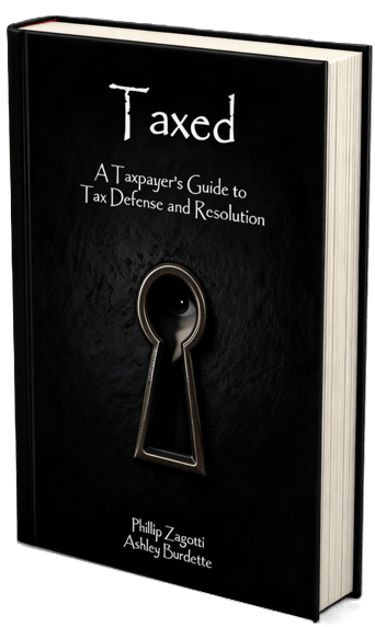
Phillip Zagotti is the co-author of Taxed: A Taxpayer's Guide to Tax Defense and Resolution, which includes a detailed chapter on innocent spouse relief — explaining the three forms of relief under IRC Section 6015, the evidentiary requirements, and the common mistakes that cause claims to be denied. The book is written for taxpayers, not tax professionals, and is available on Amazon.
When you hire North Star Law for an innocent spouse case, you are hiring the attorney who wrote the book on how innocent spouse relief works — and how to get it approved.
Frequently asked questions
What is innocent spouse relief?
Innocent spouse relief is a provision under Internal Revenue Code Section 6015 that allows a spouse or former spouse to be relieved of responsibility for tax, penalties, and interest on a joint return when the tax problem was caused by the other spouse. There are three forms of relief available: traditional innocent spouse relief under Section 6015(b), separation of liability under Section 6015(c), and equitable relief under Section 6015(f). Each form addresses different circumstances, and the IRS will evaluate all three when you file a request. The goal is to protect individuals from being held liable for a tax debt they didn't cause and didn't know about.
Can I file for innocent spouse relief if I am still married?
Yes. You do not need to be divorced or separated to request innocent spouse relief. Traditional innocent spouse relief under Section 6015(b) and equitable relief under Section 6015(f) are both available to taxpayers who are still married and living with their spouse. The only form of relief that requires a change in marital status is separation of liability under Section 6015(c), which requires that you are divorced, legally separated, widowed, or have not been a member of the same household as the other spouse at any time during the 12-month period before you file your request.
How long does the IRS take to decide an innocent spouse case?
The IRS typically takes six months to a year to process an innocent spouse request filed on Form 8857, though complex cases can take longer. During the review period, the IRS is required to notify your spouse or former spouse of your request and give them an opportunity to participate in the process. While your request is pending, the IRS may suspend certain collection activity, but interest continues to accrue on the outstanding balance. If the IRS denies your claim, you have 90 days to petition the United States Tax Court for an independent review, which can add an additional six months to two years to the process, depending on the court's docket.
What happens if the IRS denies my innocent spouse claim?
If the IRS denies your request, you have the right to petition the United States Tax Court within 90 days of the denial. The Tax Court conducts a de novo review, meaning it evaluates your case from scratch using its own independent analysis rather than simply reviewing whether the IRS made an error. Many taxpayers who are denied relief at the IRS level ultimately prevail in Tax Court because the court applies the factors more carefully and gives appropriate weight to circumstances that the IRS may have undervalued, such as domestic abuse, economic hardship, or lack of meaningful participation in financial decisions. The 90-day deadline to petition the Tax Court is strict and cannot be extended, so it is important to act quickly after receiving a denial.
Do I need an attorney for an innocent spouse case?
You are not required to have an attorney to file Form 8857, but innocent spouse cases are document-intensive, fact-sensitive, and adversarial — the IRS will notify your spouse or former spouse, who may contest your claim. A well-prepared request requires a detailed affidavit describing your lack of knowledge, corroborating financial records, and a clear legal framework tying your facts to the statutory requirements. An attorney who also holds a CPA license brings an additional advantage: the ability to analyze the underlying tax returns and financial records with the same technical depth the IRS applies, and to protect communications under attorney-client privilege. If the IRS denies the claim and the case goes to Tax Court, having experienced litigation counsel can make the difference between winning and losing.